Storytelling with data is the art of weaving analytical findings into a narrative that informs, engages, and persuades.
Unlike simple reporting, data storytelling aims to guide the audience through a logical journey—from understanding the context to recognizing the problem, interpreting the analysis, and finally embracing the recommended actions.
Effective data storytelling requires both analytical sharpness and communication creativity, combining logic, narrative structure, and visual support.
Crafting a Narrative Structure
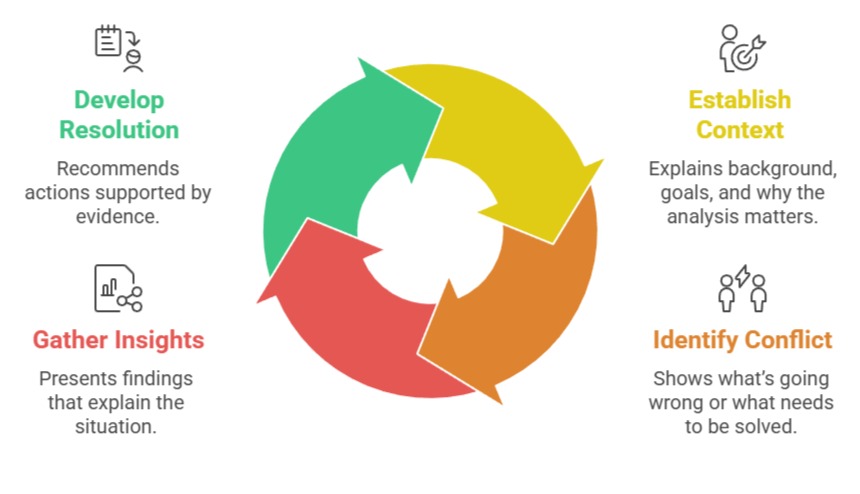
This structure mirrors traditional storytelling and helps the audience follow a logical flow.
It transforms analytical results into a meaningful storyline that feels complete and purpose-driven.
Using Data as Evidence for the Story
1. Data provides credibility and factual grounding for the narrative.
2. Each insight, claim, or recommendation should be supported by accurate data, visualizations, and interpretations.
3. Evidence-based storytelling ensures the narrative is not subjective or opinion-driven but anchored in measurable reality.
4. By strategically inserting data at key points in the story, the analyst reinforces trust and makes the narrative persuasive and defensible.
5. The strength of any data story lies in how convincingly its evidence supports its message.
Highlighting the ‘Why’ Behind Patterns
Describing what the data shows is not enough; powerful storytelling explains why patterns exist.
This moves communication from mere observation to real understanding.
Exploring the “why” could involve examining causes, influences, underlying behaviors, market changes, or operational processes that shape the data.
When analysts uncover or explain the drivers behind trends, they help stakeholders see deeper meaning and make more informed decisions.
A story that explains the reasons behind the data is far more valuable than one that only presents numbers.
Building Emotional and Cognitive Engagement
Humans relate more strongly to stories than raw statistics. Effective data storytelling creates engagement by presenting insights in a relatable, impactful way.
This could involve using relatable characters (like customers or employees), real scenarios, clear visuals, or simple language to make the narrative come alive.
Engagement helps the audience stay focused, retain information, and feel connected to the insights.
When a story triggers curiosity or concern, stakeholders become more invested in the recommendations.
Ending with Clear Actions
A data story is incomplete without a strong conclusion that outlines actionable steps.
These recommendations should be practical, specific, and directly supported by the insights presented.
The action plan should answer: “What should we do next?” and “Why will this improve the situation?” Ending with clear actions ensures the story is not just informative but transformative—guiding the audience toward solutions and decisions that are rooted in analytical evidence.

Class Sessions
Sales Campaign

We have a sales campaign on our promoted courses and products. You can purchase 1 products at a discounted price up to 15% discount.