Engaging top management and securing organizational buy-in are critical success factors for implementing an Information Security Management System (ISMS) effectively. Their active participation demonstrates leadership commitment, drives resource allocation, aligns the ISMS with business goals, and fosters a culture of security throughout the organization.
Role of Top Management in ISMS Implementation
Top management includes the senior executives and leaders who have the authority and influence to shape organizational strategy, allocate resources, and enforce policies.
ISO/IEC 27001 underscores their involvement as a foundational requirement, emphasizing leadership and commitment in Clause 5.1.
Key Responsibilities of Top Management Include:
1. Establishing the Information Security Policy: Setting clear, strategic direction and objectives for information security aligned with overall business goals.
2. Providing Resources: Ensuring sufficient financial, human, and technological resources to develop, implement, and maintain the ISMS.
3. Assigning Roles and Responsibilities: Defining accountability for information security tasks, ensuring that duties are clearly communicated and understood across the organization.
4. Reviewing ISMS Performance: Regularly evaluating the effectiveness of the ISMS and supporting continual improvement efforts.
5. Leading by Example: Demonstrating adherence to security policies to encourage staff engagement and compliance.
Building Organizational Buy-in
Beyond formal endorsement, top management must actively cultivate buy-in across the organization. This involves:
| Approach | Description |
| Communicating the Importance of Information Security | Explain why protecting information assets is essential for business success, legal compliance, and maintaining organizational reputation. |
| Aligning ISMS Goals with Business Objectives | Demonstrate how information security initiatives contribute to achieving broader goals such as customer trust, operational resilience, and competitive advantage. |
| Encouraging a Security Culture | Foster awareness, accountability, and secure behavior through regular training, clear communication, and recognition or incentives. |
| Involving Key Stakeholders | Engage cross-functional departments—such as HR, legal, finance, and operations—to ensure organization-wide understanding, coverage, and support for the ISMS. |
Overcoming Challenges to Gain Buy-In
Common challenges include misunderstanding the scope and benefits of the ISMS, competing organizational priorities, and resistance to change. Effective strategies to address these include: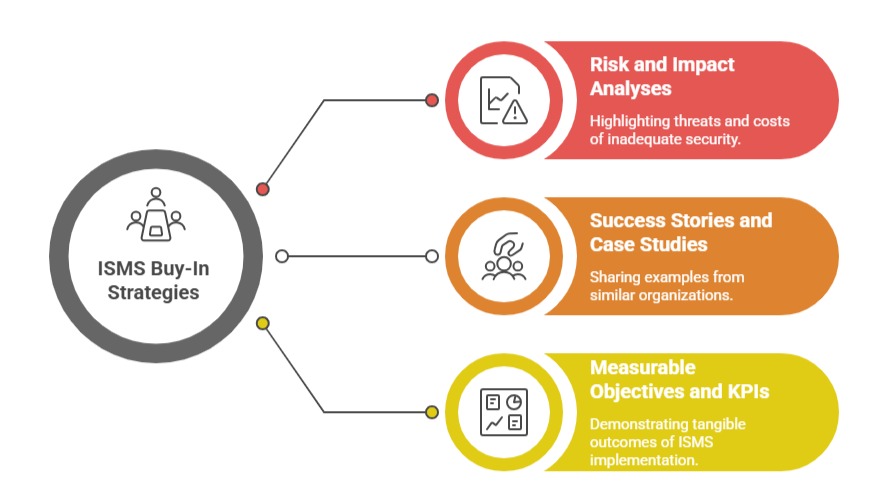
Impact of Leadership Engagement
Active top management engagement accelerates ISMS adoption, improves compliance rates, reduces security incidents, and smooths audit processes. It also signals to customers, partners, and regulators that the organization takes information security seriously.