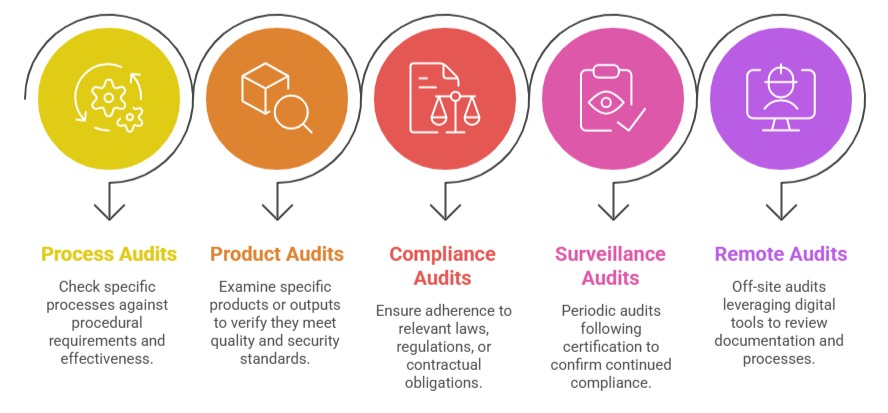
Understanding the different types of audits is essential for anyone involved in assessing management systems or organizational processes.
Audits are systematic examinations aimed at verifying compliance, effectiveness, or performance against established standards or requirements.
In information security and management systems like ISO/IEC 27001, audits help organizations identify gaps and improve controls.
First-Party Audits (Internal Audits)
First-party audits are conducted by an organization on its own processes and systems. These internal audits are a way for companies to monitor compliance with their policies, management system requirements, and legal or regulatory obligations.
Internal audits help identify areas of improvement, verify that controls are working effectively, and prepare organizations for third-party certification audits.
Since internal personnel or trained auditors conduct them, these audits provide ongoing assurance and a foundation for continual improvement.
First-party audits foster ownership and accountability within teams and are an integral part of maintaining an effective ISMS.
Second-Party Audits (Supplier Audits)
Second-party audits are performed by customers or external parties on their suppliers or contractors. The goal is to confirm that suppliers meet contractual requirements, quality standards, and security obligations.
These audits assess the supplier’s ability to deliver products or services in compliance with agreed conditions, mitigating risks related to third-party relationships.
Organizations often conduct supplier audits to ensure supply chain integrity, identify vulnerabilities, and enforce accountability across their business ecosystem.
Sometimes, organizations may engage external auditors to conduct these audits on their behalf for added impartiality.
Third-Party Audits (Certification Audits)
Third-party audits are independent assessments carried out by certification bodies or registrars. These audits determine whether an organization's ISMS complies with ISO/IEC 27001 standards, leading to formal certification.
Certification audits are rigorous and impartial, offering external validation of an organization’s commitment to information security.
They typically occur as initial certification audits, followed by periodic surveillance and recertification audits to maintain the certification status.
Third-party audits build trust with stakeholders, customers, and regulators by providing recognized proof of compliance and effective security management.
Additional Audit Types
Beyond these three primary types, audits may also be classified by method or focus, such as: