Creating a detailed audit plan and schedule is a crucial step in conducting an effective ISO/IEC 27001 audit. The audit plan acts as a roadmap, outlining what will be audited, when, who will perform the audit, and how it will be carried out.
A well-prepared plan ensures that audit activities are organized, focused, and aligned with organizational objectives, helping to avoid oversights and ensuring compliance with the ISO 27001:2022 standard.
Audit Plan Components
Below are the essential components that form a well-structured audit plan, ensuring clarity, consistency, and alignment with organizational objectives.
Defining Audit Objectives, Scope, and Criteria
1. Audit Objectives: Clearly state the purpose of the audit, such as verifying compliance with ISO/IEC 27001, assessing control effectiveness, or identifying improvement opportunities.
2. Audit Scope: Specify the boundaries of the audit, including departments, processes, locations, and systems to be reviewed, ensuring clarity on what is included and what is excluded.
3. Audit Criteria: Define the standards, policies, regulatory requirements, and ISO controls against which the audit evidence will be evaluated.
Assigning Stakeholder Roles
1. Audit Sponsor: Senior manager authorizing the audit and providing necessary resources.
2. Lead Auditor: Oversees planning, execution, and reporting.
3. Audit Team Members: Perform specific audit tasks, such as interviews and document reviews.
4. Process Owners and Auditees: Provide information, access, and support to auditors.
5. Audit Coordinator: Handles logistics and communication between parties.
Building the Audit Schedule
1. Develop a timeline detailing audit dates, location visits, interview sessions, and document review periods.
2. Consider business cycles, avoid peak operational periods, and prioritize high-risk areas.
3. Allow flexibility for unforeseen changes but maintain overall structure to cover all in-scope elements.
Using Audit Plan Templates
Utilizing pre-designed audit plan templates (e.g., Excel-based) streamlines creation by offering structured formats for recording objectives, scope, criteria, responsibilities, and schedules.
These templates ensure consistency, save time, and help meet ISO 27001 requirements efficiently.
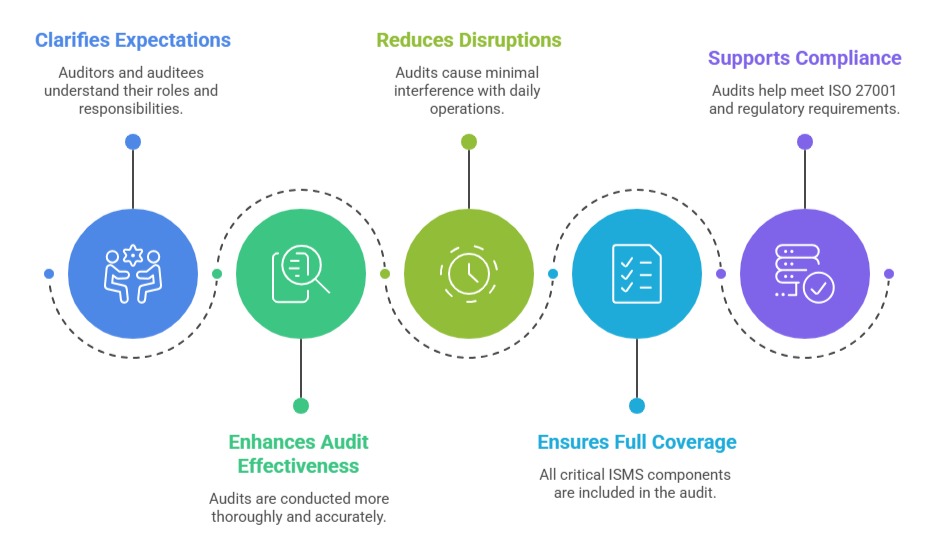
Benefits of a Well-Crafted Audit Plan
A comprehensive audit plan and schedule: