Corrective action requests (CARs) are vital tools in the ISO/IEC 27001 audit process that help organizations address identified nonconformities effectively.
To be successful, CARs must be clearly written, focused on the root causes of problems, and provide actionable steps to prevent recurrence.
Writing Clear Corrective Action Requests
A clear corrective action request should start with a concise description of the nonconformity or issue found during the audit. It must specify exactly what requirement or control was not met, providing context without ambiguity.
The CAR should then outline what needs to be corrected, who is responsible, and when the action should be completed. Clear language avoids confusion and drives accountability.
For example: "The access control policy does not specify periodic user access reviews as required by Clause 9.1.2. The IT Manager shall establish and document a schedule to review user access rights every three months by December 31, 2025."
Incorporating Root-Cause Analysis Prompts
To prevent recurrence, it is essential to understand why the nonconformity occurred. Root-cause analysis (RCA) is a systematic approach to identify underlying causes instead of just addressing symptoms.
CARs should include prompts that guide teams to analyze contributing factors such as organizational procedures, human errors, or technical failures.
Common RCA steps include:
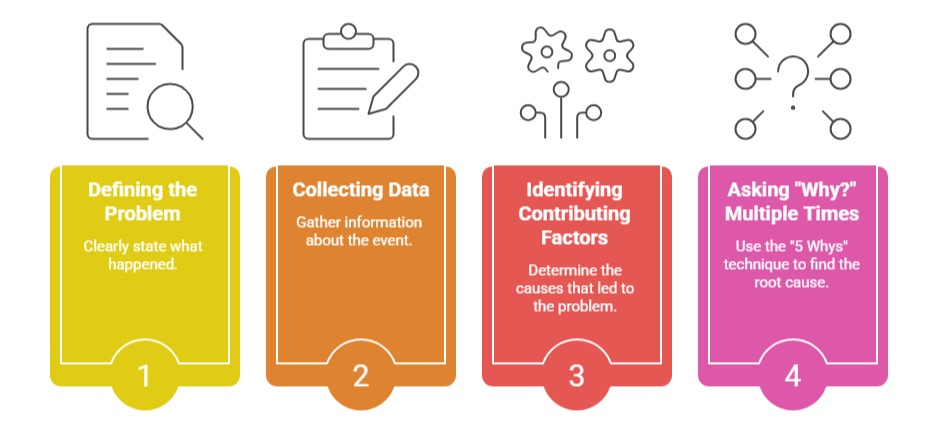 Including these prompts in CARs encourages a thorough investigation and helps develop targeted corrective measures.
Developing the Corrective Action Plan
Based on root-cause findings, the corrective action plan should list specific steps to eliminate the causes and prevent future occurrences. Assigning responsibilities, defining timelines, and specifying resources are critical.
Additionally, plans must include verification steps, such as internal audits or testing—to confirm that actions have been effective.
Follow-Up and Continuous Improvement
Corrective action requests should be tracked until closure. Regular monitoring ensures timely implementation, and effectiveness reviews evaluate if the problem is resolved sustainably.
Using a structured CAR template aligned with ISO/IEC 27001 requirements simplifies management and communication.