DevOps is one of the most transformative approaches in modern software development and IT operations.
At its core, DevOps is a combination of the words "Development" and "Operations", and it represents a culture, a mindset, and a set of practices that bring these two traditionally separate teams together.
The goal is simple but powerful: to deliver software faster, more reliably, and with better quality.
Whether you are a developer writing code or an operations engineer managing infrastructure, DevOps creates a shared responsibility and a unified way of working.
The Traditional Problem: Dev vs. Ops
To truly understand DevOps, it helps to look at how things worked before it existed.
In traditional IT environments, development and operations teams worked in silos — separately, with very little communication. Here is what that typically looked like:
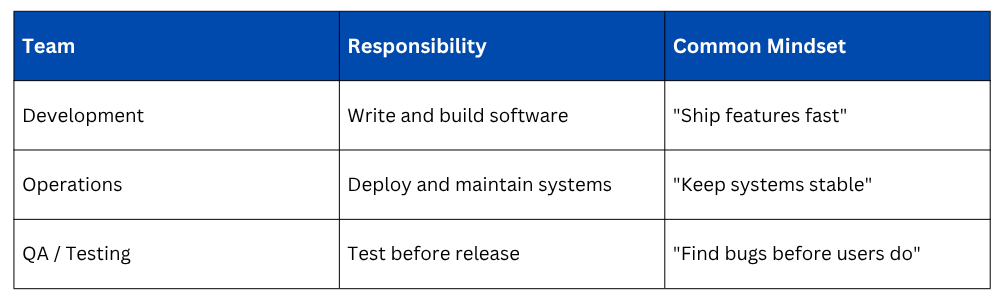
This separation caused serious problems:
1. Developers would write code and "throw it over the wall" to operations
2. Operations teams were often unaware of what changes were coming
3. Releases were slow, risky, and sometimes broke production systems
4. Blame culture developed — each team pointed fingers at the other when things went wrong
DevOps was born as a direct response to these challenges.
What is DevOps?
DevOps is not a single tool, a job title, or just a technology. It is a cultural and professional movement that encourages collaboration, communication, and integration between software development and IT operations teams.
A widely respected definition comes from the DevOps community:
DevOps is a set of practices, cultural philosophies, and tools that increase an organization's ability to deliver applications and services at high velocity.
In simpler words, DevOps helps teams build, test, and release software quickly and consistently.
Key Characteristics of DevOps

DevOps as a Culture
One of the most important things to understand is that DevOps is first a culture, then a toolset. Without the right mindset and team collaboration, no tool can truly make DevOps work.
This culture is built on:
1. Trust and transparency between teams
2. Blame-free post-mortems — when something fails, the focus is on learning, not blaming
3. Experimentation and learning — failure is treated as a learning opportunity
4. Empathy — developers understand operational challenges, and operations understand development pressure
DevOps and Agile — Are They the Same?
A common question among beginners is whether DevOps and Agile are the same thing. They are related but not identical.
Agile focuses on iterative software development and collaboration between developers and business stakeholders.
DevOps extends that collaboration further, bringing in the operations side to ensure smooth deployment and operations.
Think of it this way: Agile builds the right product. DevOps delivers it reliably and continuously.
Why Does DevOps Matter?
Organizations that adopt DevOps practices see significant improvements across the board:
1. Faster time to market — features and fixes reach users more quickly
2. Higher deployment frequency — teams can release multiple times a day instead of once a month
3. Fewer failures — automated testing and monitoring catch problems early
4. Faster recovery — when issues occur, teams can detect and fix them quickly
5. Better team morale — collaboration reduces friction and burnout
Popular Tools Associated with DevOps
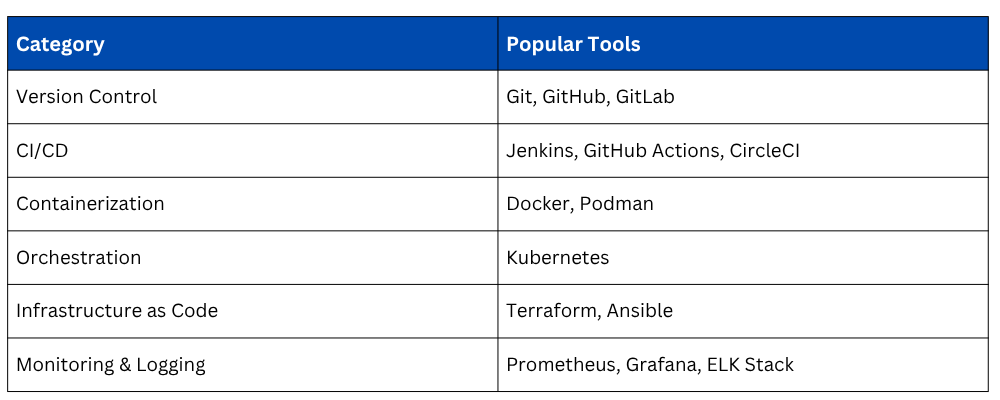
While DevOps is a culture and practice, several tools support its implementation: