Every successful DevOps implementation is built on a strong foundation of core principles. While DevOps involves many tools and practices, three principles stand out as the most fundamental — Collaboration, Automation, and Continuous Feedback.
These are not just technical concepts; they are the values and behaviors that define how DevOps teams think, work, and grow together.
Without these principles in place, even the best tools will fall short.
Collaboration
Collaboration is the first and perhaps the most human principle of DevOps.
It is the practice of breaking down the walls between teams, particularly between development, operations, security, and quality assurance — so that everyone works toward a shared goal rather than individual departmental objectives.
In traditional IT environments, teams operated in isolation. Developers focused on writing code, operations focused on keeping systems running, and communication between them was minimal and often reactive.
This created friction, delays, and a culture of blame. DevOps directly challenges this by making collaboration a core working principle, not an optional practice.
Why Collaboration Matters
Consider a simple scenario: a developer writes a feature and passes it to the operations team for deployment.
Without collaboration, the operations team may be unaware of what the feature does, what dependencies it has, or how it affects the system. This leads to failed deployments, long debugging sessions, and frustrated teams.
With collaboration:
1. Teams share knowledge and context from the very beginning.
2. Problems are solved together, not passed around.
3. Everyone understands the full picture — from code to customer.
How Collaboration is Practiced in DevOps
1. Shared ownership: Both developers and operations engineers own the product together — not just their individual parts of it.
2. Cross-functional teams: Teams are structured to include people with different skills working side by side.
3. Joint planning: Developers and operations participate together in sprint planning, standups, and retrospectives.
4. Common goals and metrics: Instead of each team having separate KPIs, DevOps teams share metrics like deployment frequency, system uptime, and customer satisfaction.
5. Blameless culture: When something goes wrong, the focus is on understanding the root cause, not finding someone to blame.
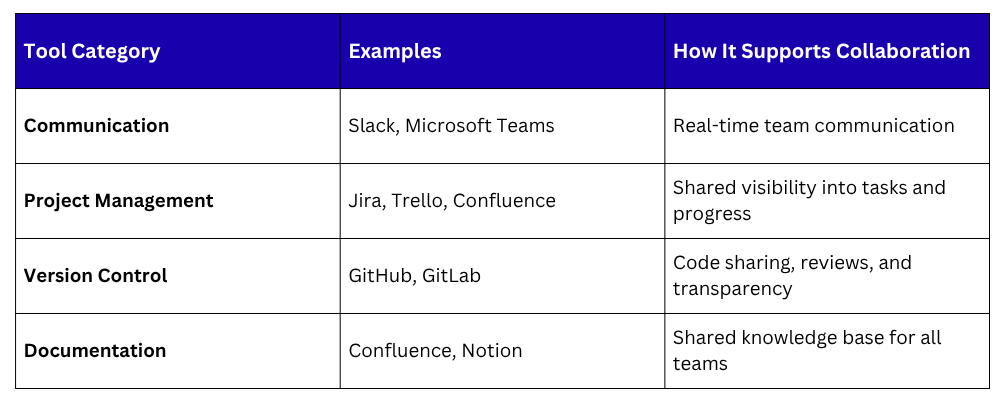
Collaboration and Tools
While collaboration is a cultural practice, certain tools support it effectively:
Automation
Automation is the principle of using technology to perform repetitive, manual tasks automatically, consistently, and at speed.
In the context of DevOps, automation touches nearly every phase of the software delivery lifecycle — from writing code to deploying it to monitoring it in production.
The simple truth is this: humans make mistakes, especially when performing the same task repeatedly under pressure. Automation removes that risk.
It ensures that every build is done the same way, every test is run every time, and every deployment follows the exact same steps, without shortcuts or human error.
Why Automation Matters
Without automation, scaling DevOps is nearly impossible. Imagine a team releasing software ten times a day — manually running tests, manually configuring servers, and manually deploying code each time.
It would be exhausting and error-prone. Automation makes high-frequency, high-quality delivery practically achievable.
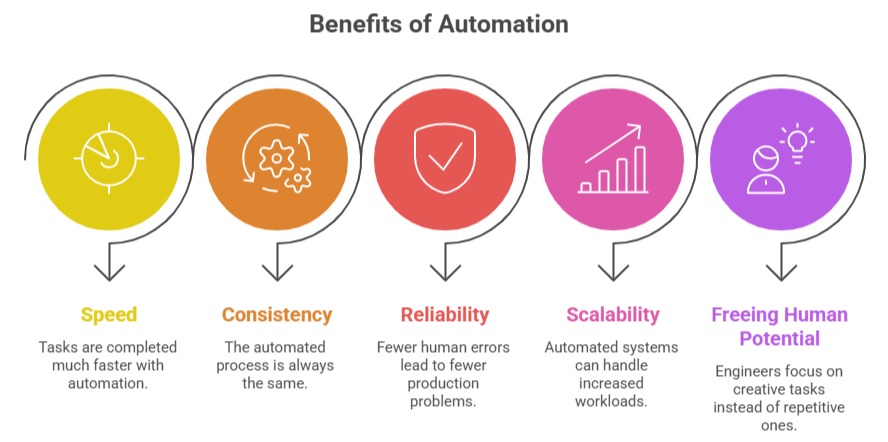
Areas Where Automation is Applied in DevOps
1. Continuous Integration (CI): Every time a developer pushes code, an automated pipeline triggers — compiling the code, running tests, and reporting results. No manual steps required.
2. Continuous Delivery / Deployment (CD): After code passes all tests, it is automatically packaged and deployed to staging or production environments.
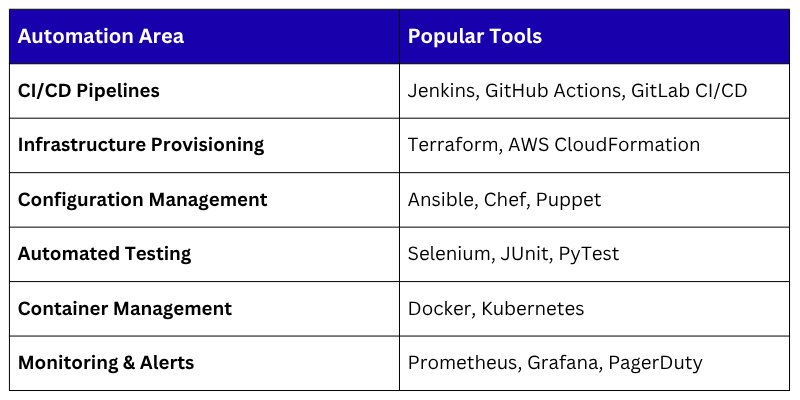
3. Infrastructure as Code (IaC): Instead of manually setting up servers, infrastructure is defined in code files and automatically provisioned using tools like Terraform or Ansible.
4. Automated Testing: Unit tests, integration tests, and security scans run automatically on every code change — catching issues before they reach users.
5. Monitoring and Alerting: Systems automatically track performance metrics and send alerts when something falls outside acceptable thresholds — without anyone having to watch dashboards constantly.
Automation Tools in DevOps
Continuous Feedback
Continuous feedback is the principle of constantly gathering, sharing, and acting on information throughout the software development and delivery process.
This feedback can come from automated systems, monitoring tools, end users, or team members, and it flows in all directions, not just from managers to engineers.
In DevOps, feedback is not something that happens at the end of a project during a review meeting. It happens at every stage, in near real-time, so that problems are caught early, improvements are made quickly, and teams are always learning.
Why Continuous Feedback Matters
Think about what happens when feedback is delayed. A developer writes code today, but does not find out it has a bug until three weeks later during a quarterly release. By then, the context is lost, the fix is harder, and the damage to users may already be done.
With continuous feedback:
1. Bugs are caught within minutes of code being written.
2. System issues are detected before users even notice.
3. Teams understand exactly how their software performs in the real world.
4. Decisions are driven by data, not assumptions.
Types of Continuous Feedback in DevOps
1. Code-Level Feedback
Automated test results tell developers immediately whether their code works.
Code review comments from peers improve code quality before merging.
Static analysis tools flag security issues or poor code quality in real time.
2. Pipeline Feedback
CI/CD pipelines report whether a build passed or failed — within minutes of a code push.
Developers receive instant notifications via email or Slack if something breaks.
3. System and Performance Feedback
Monitoring tools track CPU usage, memory, response times, and error rates.
Dashboards give the entire team visibility into how the system is performing.
Alerts fire automatically when thresholds are crossed.
4. User Feedback
Analytics tools track how users interact with the application.
Crash reports and error logs reveal real-world issues.
Customer support tickets and reviews provide qualitative feedback.
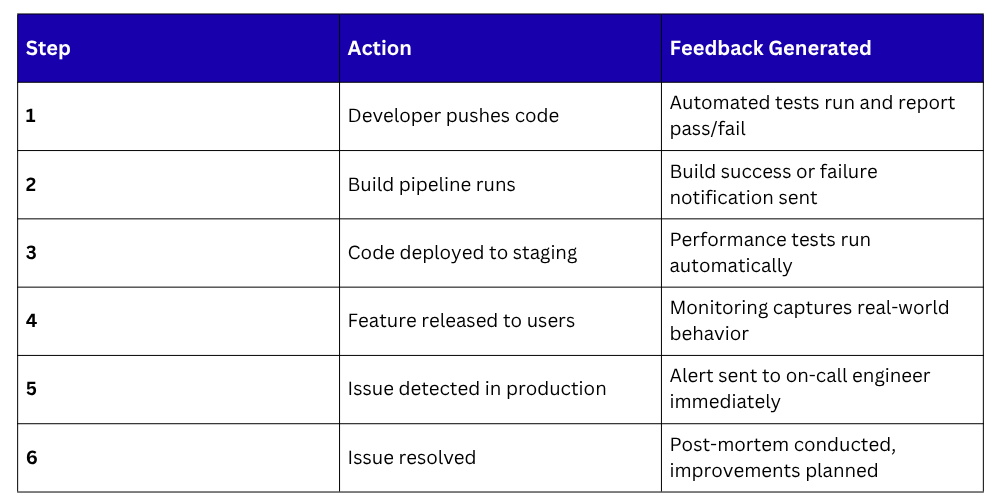
The Feedback Loop in Action
Here is how a typical continuous feedback loop works in DevOps:
How These Three Principles Work Together
These three principles are not independent — they reinforce and depend on each other:
1. Collaboration ensures the right people are working together and sharing knowledge.
2. Automation ensures that work is done fast, consistently, and at scale.
3. Continuous Feedback ensures that teams always know what is working and what needs to improve.
Together, they create a virtuous cycle — teams collaborate to build something, automation delivers it quickly and reliably, feedback reveals how it is performing, and that insight loops back to inform the next round of collaboration and planning.